Undergraduates Spend the Summer Conducting Research at NC State’s Marine Lab
A summer spent raising frogs, understanding sea turtle hearing, coral bleaching, and even testing the edibility of salmon skin chips.
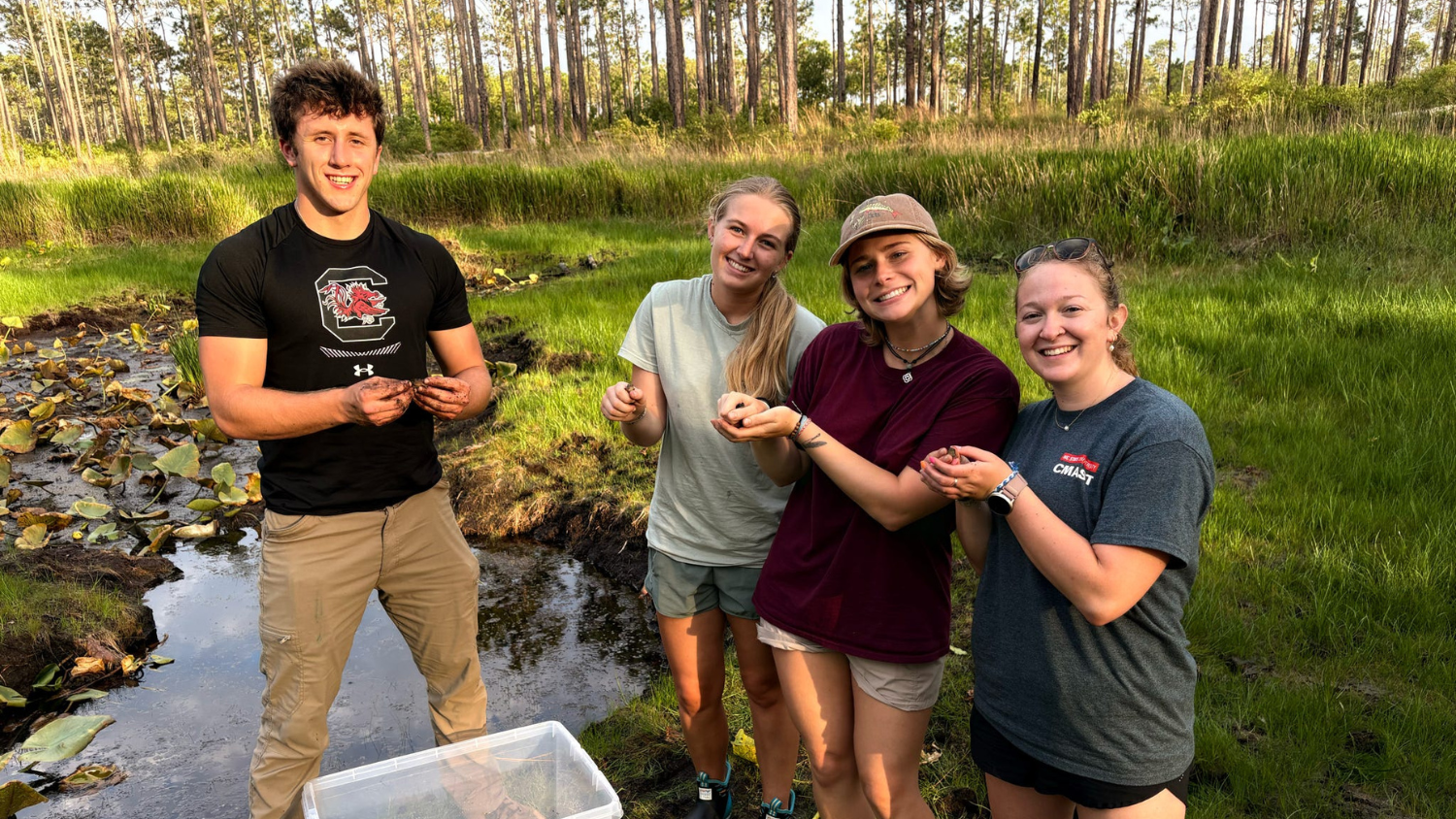
One of the best parts of the year at NC State’s Center for Marine Sciences and Technology (CMAST) is May through August, when the lab is full of undergraduates gaining hands-on experience in marine sciences. The fellowship programs offered at CMAST provide students with mentored opportunities to design independent research projects and participate in additional research activities happening around the lab.
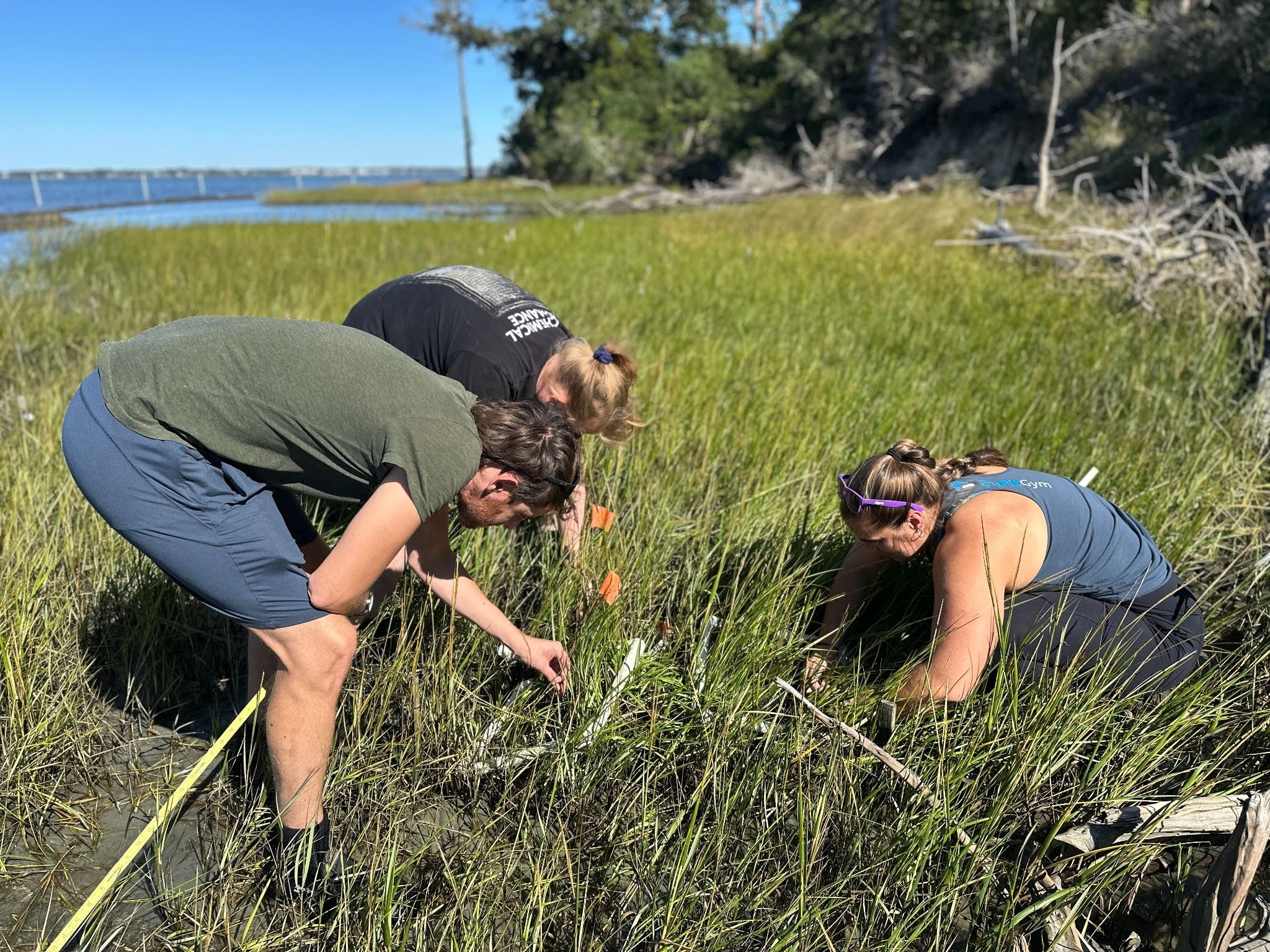
When the students presented their research at the end of the summer, NC State senior, Sophia Ayers, started her talk by passing a live gopher frog around the room. These endangered frogs are part of a headstarting program in North Carolina, where their eggs are collected and raised by local researchers until they’re ready to be released back to their home. This strategy helps to enhance gopher frog populations in the state. That is how Sophia wound up tending to 272 frog eggs this summer. Mentored by Dr. Carol Price, she and fellow Brady Patton, also designed a project modeled off of an app started by the South Carolina Aquarium that collects data from collected litter. She and Brady worked together to examine the difference between total trash composition at three different sites along Bogue Banks. Over a span of five collection days, they collected over a thousand items of trash, of which the vast majority were cigarettes.
“These projects taught me so much about my future as an aspiring conservation biologist, and the faculty and professors at CMAST have been an inspiration throughout my experience,” said Sophia.
Patton, an undergrad at the University of South Carolina, worked with Dr. Price on the spot-a-shark project. For this project, he identified individual sand tiger sharks based on spot patterns, contributing to Dr. Price’s research on the critically endangered species. He even had the opportunity to scuba dive with these sharks and collect data first hand. He identified around 100 unique sharks, contributing to the data on their usage of shipwrecks off the coast of North Carolina.


NC State junior, Emalee Fox, formed many coastal connections while at CMAST, and even learned how to shuck her first oyster! Mentored by Dr. Tal Ben-Horin, she spent the summer in the shellfish pathology lab performing physical examinations, genetic molecular analysis, field surveys, and more.
Her independent research project focused on comparing an undescribed bacterium recently found in oysters, to a well known abalone pathogen Candidatus Xenohaliotis californiensis. This bacterial parasite of abalone species has been particularly detrimental on the West Coast of the US due to it causing a disease known as Withering Syndrome, where Xenohaliotis californiensis blocks nutrient absorption in the gut leading to the organism digesting its own foot muscle. This pathogen is likely an introduced and invasive one, due to its sudden appearance in the Channel Islands around the 1980s followed by a rapid spread through the ecosystem subsequently causing massive die offs of its host.
Using phylogenetic analysis, Fox looked at the relation between this oyster symbiont and abalone pathogen over several different gene targets, understanding how when species are transported to different coastlines so are their biological communities. This was Fox’s first experience in marine science research, and she valued the chance to conduct this research on the coast!
Joanna Ohara, a junior at NC State, worked with genetics & genomics Ph.D. student Zach Zagon in the Rodgers Lab to conduct a coral bleaching experiment. They collected local non-reef building stony corals, and conducted a heat-stress experiment. When under stress, corals may expel the symbionts, or helpful organisms living inside them, which causes coral bleaching. But bleaching does not mean 100% mortality. After bleaching, corals can either recover their tissues and symbionts, or they can die, particularly after prolonged stress and multiple stressors. Ohara and Zagon wanted to collect data on which corals could survive heat-stress, and to determine changes in the coral community’s microbial composition.


Grace LaCognata, NC State senior, spent her summer researching the effects of grain size and water quality on oyster density and growth in the Pamlico Sound with the Eggleston Lab. Knowing what factors affect oyster morphology is important because they are a major fishery for NC and a keystone species. She found that a smaller grain size will decrease the density and size of oysters because it will increase risk of larval oysters being buried and sinking. She also found that increases in temperature and salinity combined with a decrease in dissolved oxygen did not affect the density and size of oysters since these markers are typically cues for spawning, but when they’re out of range like this they can be considered stressors and it is important to figure out causes of abnormal conditions.
Additionally, Grace worked with Eggleston Lab graduate student Mikayla Carrier, and Dr. Del Bohnenstiehl to analyze soundscape data from Turks and Caicos to identify potential fish calls and match them to video footage.
“Spending the past eight months learning and working at CMAST was one of the most influential experiences of my life. The professors and staff at CMAST are so encouraging and eager to help you learn and offer opportunities that aren’t available on main campus.” said LaCognata.


A summer fellow for the second year, Victoria Hill is a senior in Fisheries and Wildlife Conservation Biology at NC State. She evaluated retrospective projection discrepancies in South Atlantic stock assessments this summer, mentored by Dr. Jie Cao, who helped her compare the South Atlantic snapper-grouper assessments produced by the Southeast Data, Assessment, and Review (SEDAR) process, conducted by NOAA Fisheries’ Southeast region. From there, she evaluated how long it takes for the scientific advice given by stock assessments to actually be implemented on the water by management agencies, finding that this delay is often longer than projections assume, which means fish populations can keep being fished at unsustainable levels even after scientists have flagged the problem. This experience has confirmed Victoria’s desire to pursue a graduate degree and career in quantitative fisheries science, building and improving the population dynamics models that give managers the best available science to work from.
Tori Neal, NC State senior, mentored by Dr. Craig Harms and Dr. Greg Lewbart, assisted with an ongoing research project investigating underwater hearing in sea turtles. There is an interest in how sea turtles hear because human-induced noise is increasing in marine environments. This noise may interfere with sea turtle behavior and survival. Tori was responsible for helping with sea turtle husbandry and assisting during the research trials. The results from this study will help improve scientific understanding of underwater sea turtle hearing and support evidence based noise regulations.


Annabelle Sheets came to CMAST from Louisiana Tech University as a food science summer scholar, mentored by Dr. Alex Chouljenko. Her research focused on how to best use the by-products created from the company ACME, which produces cold-smoked Atlantic salmon. The by-products she focused on is salmon skin. The skin is tough and has proved difficult to form into high-value products, but there are some existing products using the by-product such as pet treats, and animal food. Her objective this summer was to develop a simple, sustainable method to upcycle smoked salmon processing byproducts into marketable food products. She learned that the best way to reduce the salt and lipids in the skin causing it to be so tough, is to put it through high temperature washing combined with freeze-drying. This offers a simple strategy for processors like ACME to upcycle their high-lipid, high-sodium byproducts. “I learned a lot about not just the academic world but was given lots of insight into the industry. It was an amazing experience and I’m so glad I did it!” said Sheets.
NC State’s Center for Marine Sciences and Technology summer fellows program provides undergraduates their first experience doing marine science research on the coast. This experience shapes the undergraduate’s career goals and time at NC State, and CMAST faculty enjoy the opportunity to mentor these young marine scientists.