
Fisheries Science
Overview
Fish populations grow through recruitment (young fish entering the population) and individual growth. They shrink through natural mortality, such as predation or sudden cold-water events, and through fishing. Measuring these vital rates, and knowing how they change over space and time, is the basis of sustainable fisheries management.
To estimate them, we combine field and quantitative approaches. These include net sampling, external tagging, acoustic telemetry, diet studies, spatiotemporal modeling of survey data and stock assessment modeling. We work closely with commercial and recreational fishermen and with scientists at state and federal management agencies, so our research is grounded in real fisheries and feeds directly into management decisions.
The program is made up of several faculty (Jeff Buckel, Jie Cao, and Nathan Hostetter) from the College of Agriculture and Life Sciences Dr. Jeff Buckel, a resident faculty, conducts research to improve assessment and management of marine and estuarine fisheries. Another resident faculty member, Dr. Jie Cao, is an expert in population dynamics, stock assessment and spatiotemporal modeling, and his assessment models are used in management of several U.S. stocks.
Collaborators include the North Carolina Division of Marine Fisheries, NOAA’s Beaufort Laboratory, University of Florida, University of South Alabama, University of North Carolina at Chapel Hill, University of North Carolina at Wilmington, University of Massachusetts, SUNY Stony Brook, University of Maryland, and Rutgers University.
Some specific examples of work in NC include:
- Stock assessment models for spotted seatrout and blue crab used in North Carolina management
- Spatiotemporal species distribution models for South Atlantic snapper-grouper using fishery-independent trap and video surveys
- Historical fishing photographs and citizen science (FISHstory) to reconstruct abundance and size trends
- Estimates of red snapper abundance in the southeastern US Atlantic
- Discard rates and fate of reef and pelagic fishes in Onslow Bay, North Carolina
- Estimation of fishing and natural mortality rates of red drum and gag grouper using a combined tag and telemetry approach
- Ecology of bluefin tuna feeding during winter and potential impacts on Atlantic menhaden
- Striped bass and river herring interactions in Albemarle Sound
- Winter survival of bluefish and recruitment implications
- Coastal recruitment indices for bluefish from New York to Florida
- Age and growth of dolphin fish in North Carolina
Fisheries Ecology
Buckel Lab
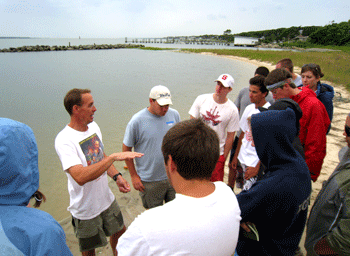
The fisheries ecology group addresses the question, “What causes populations of fish to vary in size?” Increases in population size result from production of young fish, which we refer to as ‘recruitment’.
The Buckel Lab conducts research to improve assessment and management of marine and estuarine fisheries.
Dr. Jeff Buckel serves on NC Marine Fishery Commission advisory boards and the South Atlantic Fishery Management Council’s Science and Statistical Committee.
What outreach does the lab do?
- Research from the Marine and Estuarine Fisheries Ecology group has been used in state and federal fishery and habitat management plans. Additionally, personnel from the group give presentations to K-12 students, recreational fishing clubs, commercial fishing groups, and high school instructors.
- Some specific examples in NC include:
- Pamphlet on ethical angling for grouper
- Data and analytical support for the red drum fishery stock assessment
- Data for the striped mullet fishery management plan
- Data for the spiny dogfish compliance advisory panel
Lab Team


Bethany Wager, Ph.D. Candidate
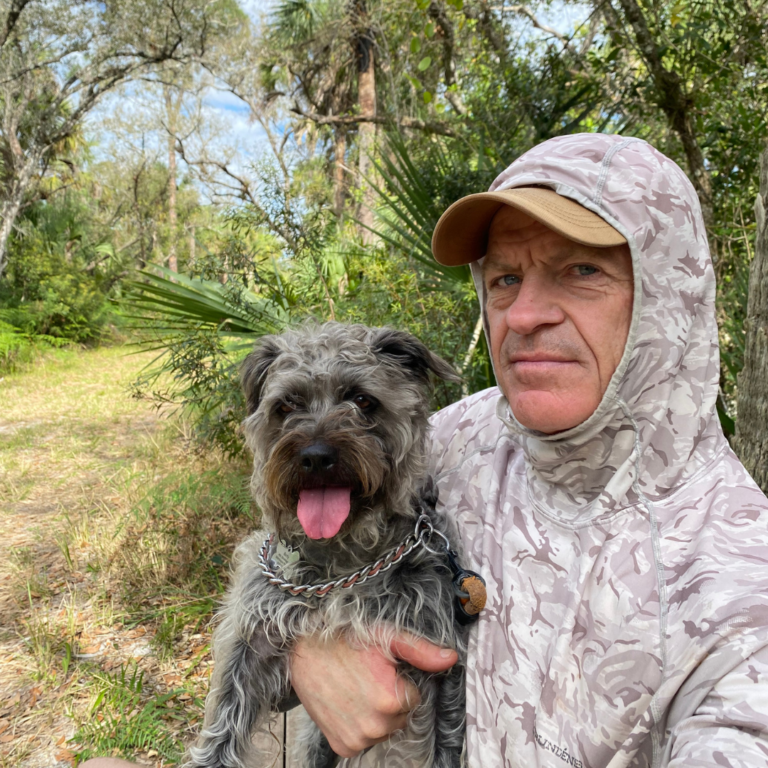
Bethany is a Ph.D. candidate and AAUS scientific diver at NC State studying movement patterns and habitat use of marine fishes. During her graduate career, she has enhanced her leadership and science communication skills while working with National Marine Sanctuaries as a NOAA Dr. Nancy Foster Scholar. She aspires to apply these skills to her dissertation and more broadly to marine fisheries ecology and management. Using novel datasets, she is studying drivers of change in fisheries ecology, specifically, how climate change and differing habitat characteristics influence reef fish communities, survival, and spatiotemporal habitat use.

Quantitative Fisheries Modeling
The Quantitative Fisheries Program in the College of Agriculture and Life Sciences leads research, education, and extension programs focused on providing quantitative scientific advice for fisheries management.
Program Overview
The program is led by Dr. Jie Cao and works closely with the state, federal and international natural resource agencies. Our major foci are currently:
- Stock assessment: developing and evaluating the population models used to determine stock status and set catch advice
- Spatiotemporal modeling: estimating where fish are, how their distributions and habitats shift over time, and what that means for understanding population dynamics
- Survey design and data integration: designing and evaluating fishery-independent and fishery-dependent surveys, and integrating multiple data streams to strengthen inference about fish populations
- Management strategy evaluation: testing how well management strategies perform under a range of scenarios, including climate and ecosystem change
Ongoing Research
- Improving and Integrating Fishery-Independent Surveys to Enhance Stock Assessment and Fishery Management in the US South Atlantic
- Modeling Spatial Distributions and Habitat for Species off the Southeastern US Coast
- Estimating Growth and Natural Mortality in Support of the North Carolina Blue Crab Stock Assessment
- Expansion of the FISHstory Citizen Science Project
Lab Team

Current Students
- Made Ayu Pratiwi, Ph.D. student
- Madison Ghosh, Ph.D. student
- Victoria Hill, M.S. student