Students
Mikayla Carrier
Mikayla Carrier completed her BA in Biology at Scripps College in Claremont, California in May 2021. During her undergraduate career she researched mutant polymerases that were able to synthesize modified DNA. However, after she studied abroad in the Turks and Caicos, she decided to shift her focus to marine science. She completed her PADI Divemaster certification in the Florida Keys while she interned with Reef Environmental Education Foundation. Before starting graduate school, Mikayla worked abroad in the Bahamas and Turks and Caicos as a divemaster, educator, and research assistant.
Mikayla’s PhD focuses on marine bioacoustics and coral reef conservation, using fish sounds, underwater acoustics, video technology, and long-term reef monitoring to better understand reef health and biodiversity. Her current research is in collaboration with the School for Field Studies in the Turks and Caicos where she combines these tools to explore the health of South Caicos reefs. Mikayla is also interested in science outreach and is currently building a virtual reality experience that shares underwater footage and fish sounds from her research with the public.
Abby Snelling
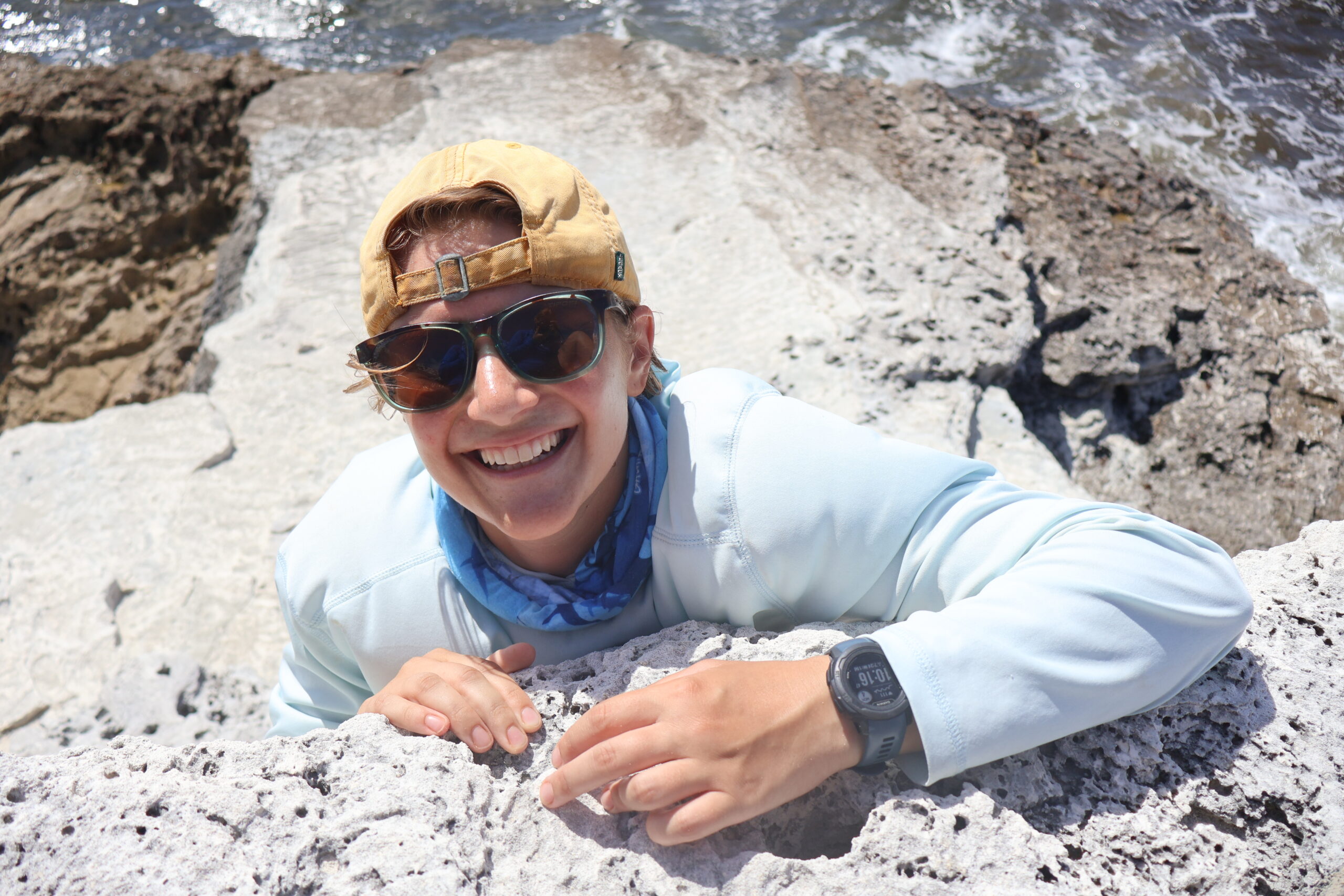
Abby Snelling comes to NC State as a master’s student from Michigan State University, where she completed her BS in Zoology. During her undergraduate education, she pursued various research and outreach opportunities. One such experience, a research and education internship aboard New England Aquarium’s whale watch vessels in Stellwagen Bank National Marine Sanctuary, sparked her curiosity in marine predator-prey relationships and habitat management.
Abby is interested in using acoustic monitoring and other non-invasive methods to study vulnerable marine populations. In her MS, she is working to understand the success of oyster reef restoration and the viability of sustainable fisheries in Pamlico Sound. She is particularly interested in food web complexity as an indicator of reef health. In addition to pursuing research, Abby runs the marine science focused Instagram account @absaquaria and is passionate about connecting with the community about marine conservation through public outreach and education.

John Brooks
John is a PhD student at NC State University studying finfish use of newly constructed oyster sanctuaries in Pamlico Sound, North Carolina. His research focuses on the soundscape ecology of soniferous fishes, particularly Sciaenidae (drums and croakers), and their use of oyster reefs as essential habitat. Using passive acoustic monitoring, he analyzes long-term underwater acoustic datasets to better understand the presence and
behavior of these species.
Having grown up on Harkers Island, North Carolina in a commercial fishing family, John’s interest in marine science stems from his upbringing in the water. With many summers spent aboard his family’s shrimp trawler, he gained an early appreciation for coastal ecosystems and the challenges facing fishing communities. He earned bachelor’s degrees in Biological Sciences and Environmental Sciences from NC State University in 2022 as a Distinguished Goodnight Scholar. As an undergraduate, he worked with the National Park Service at Cape Lookout, assisting with sea turtle and shorebird management.
As a member of the Benthic Ecology and Marine Conservation Lab, John has contributed research on bay scallop distribution in several North Carolina sounds and the effects of hopper dredging on fishery-significant species in Beaufort Inlet. After completing the KIETS Climate Leaders Program in 2025, his research has increasingly focused on developing an automated “Drum Detector” to identify and quantify sound production by Red Drum (and potentially other soniferous fishes) in coastal North Carolina.

Daniel Bowling
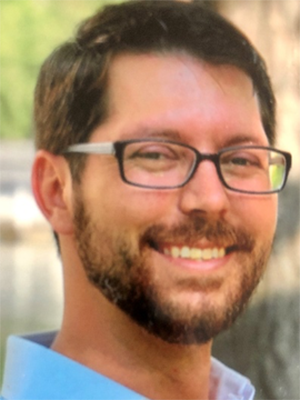
Daniel Bowling earned his BS in Marine Biology and Environmental Science at the University of North Carolina at Wilmington. Following this, he spent many years working and conducting research abroad in Australia and Fiji where he worked with local communities, NGOs, government, universities, and tourism to address local and regional issues, protect critical habitats, study endangered and vulnerable species, and conduct education and community outreach.
His interests are in applied ecology where inter-disciplinary science can investigate and develop real-world and practical solutions. For his PhD., he is working with local oystermen, The Nature Conservancy, North Carolina Division of Marine Fisheries, and regional university colleagues to design and test a statistically robust, cost-effective fishery-independent population survey methodology for subtidal and intertidal oysters in North Carolina.
This new sample design aims to fill some of the data gaps currently surrounding the fishery, which will allow for the future development of a stock assessment.
Melissa LaCroce
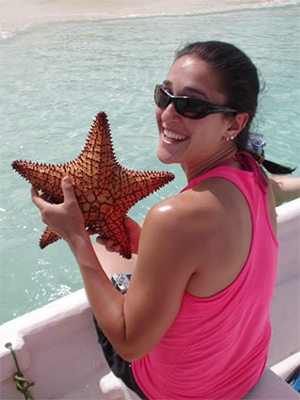
Melissa LaCroce is interested in community and benthic ecology as well as habitat conservation. She received her BA from Manhattanville College where she studied the distribution of predator species, Hemigrapsus sanguineus and prey species, Littorina littorea in western Long Island Sound rocky intertidal zones.
After working as an environmental educator aboard traditional sailing vessels on the Long Island Sound and Chesapeake Bay she obtained her MS from the University of North Carolina Wilmington. There she studied the seasonality and recruitment of the epibenthic community on an Onslow Bay, North Carolina hard bottom.
As the technician in the Marine Ecology and Conservation Lab she plans to assist all current and future students with their projects and continue to be a life-long learner. Melissa is looking forward to learning more about drone mapping and soundscape metrics.