Trevyn Toone: Unraveling the Mystery Between Marshes and Mussels
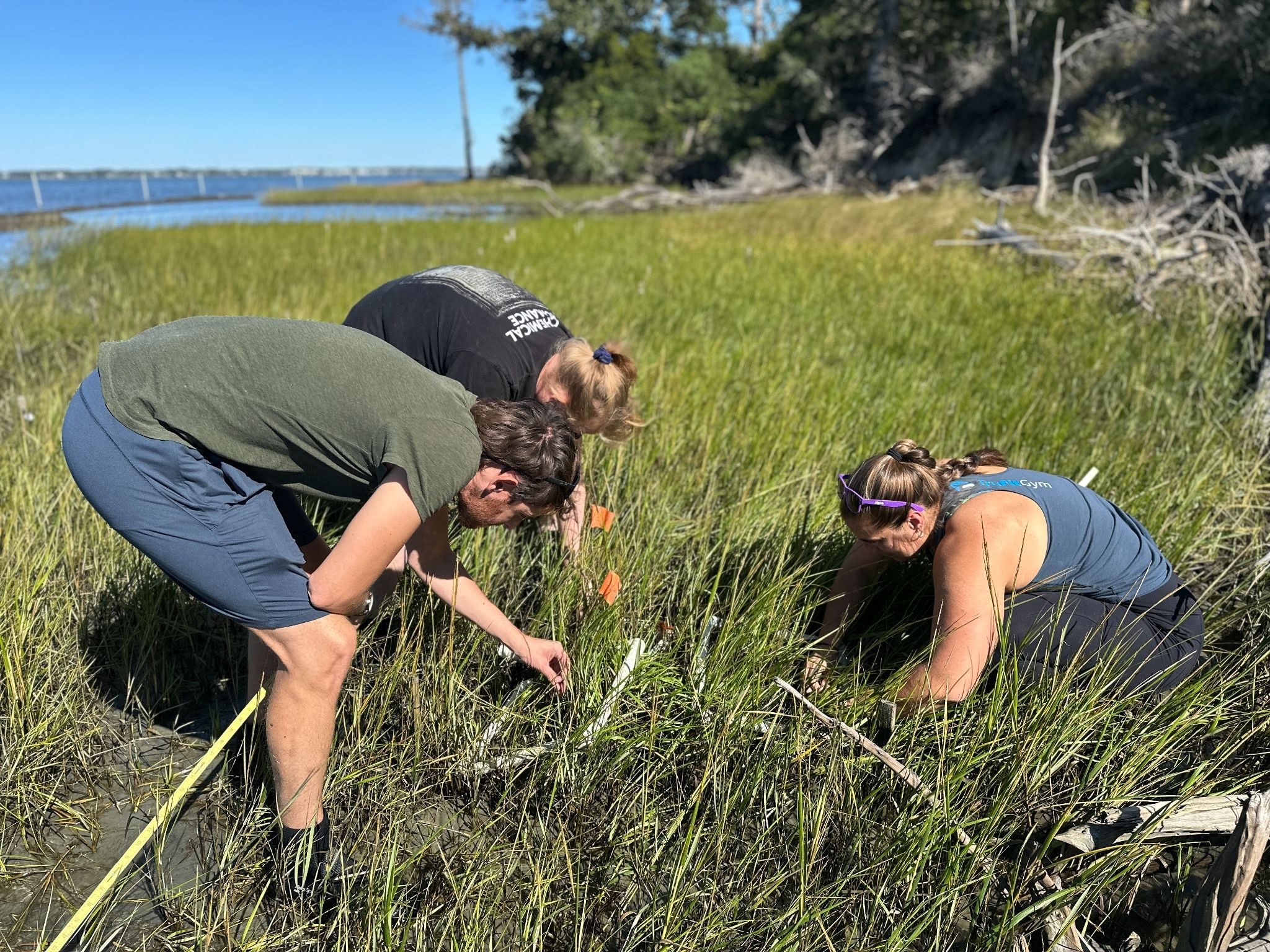
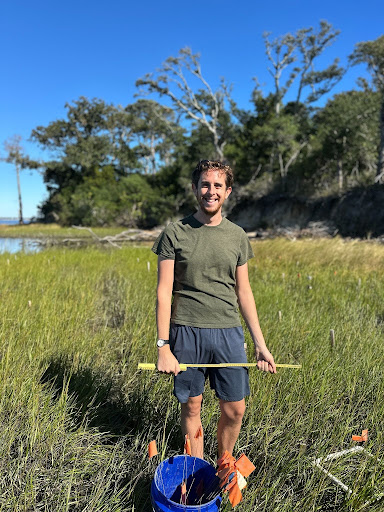
Squishy mud. An abundance of small, scuttling critters. A distinct rotten egg smell that some surprisingly love. This muddy saltmarsh is where postdoctoral researcher Trevyn Toone conducts his work.
Unlike most saltmarshes, this site is a restored marsh, not a natural one. The restored marsh lies behind a newly constructed living shoreline, and Toone is looking into how and why mussels may help this marsh.
Though sometimes unseen, ribbed mussels are often underfoot in the marsh. These bivalves, similar in size to oysters, are a bit different than the mussels typically found at seafood restaurants. Rather than clinging to hard surfaces like rocks or wood, these mussels are just barely sticking out of the marsh mud — out of sight, but performing an integral task.
The mussels connect themselves to the roots of marsh grass, which stabilizes the grass and anchors the marsh in place. The presence of mussels makes marshes more resilient by preventing erosion, protecting the ecosystem from drought and adding nutrients.
However, scientists are finding that restored marshes don’t recruit as many mussels as natural marshes, which may make them less resilient. Toone, a postdoc in the Zhang lab at NC State’s Center for Marine Sciences and Technology (CMAST), is, as he puts it, on a mission to “unravel the mystery of this mutualism between the marsh and mussels.”

Toone’s research focuses on exploring ways to restore marshes to their “healthy, happy states” after decades of decline. At the NC Aquarium at Pine Knoll Shores, multiple organizations have come together to build a living shoreline and restore the marsh that had been eroding for years. But, the aquarium’s restored marsh is still lacking a staple of a healthy marsh: the mussels, making it the perfect place for Toone’s experiment.
Ultimately, Toone intends to figure out why restored marshes lack an abundance of mussels to begin with. But first, he had to determine if adding back the missing mussels made this marsh any healthier. So, he conducted an experiment to examine any positive interactions between ribbed mussels and the marsh.
At Toone’s study site, 25 plots — each a square meter in size — were submerged in the marsh and marked with wooden poles. Five of the plots had just shell, or dead mussels, buried in the plot of mud. Other plots had nutrients, while others had a combination of shell and nutrients, and some plots actually had live mussels placed in them. Five were control plots that didn’t have anything.

Each sampling period, Toone and his team visited each plot and measured how many live, dead or flowering shoots there were of marsh grass. They also took note of the shoot lengths and number of surviving mussels. Over the course of this experiment, Toone and his team measured over 3,500 marsh grass shoots.
Surprisingly, all of Toone’s data and sampling revealed that the mussels actually had no significant impact on the health of the restored marsh. Unlike in a natural marsh, where mussels make the ecosystem more resilient, the mussels and alternative treatments in this restored marsh did not improve its outcomes any more than the control plots, at least not in the timeframe of this experiment.
So what’s next? Following up on this work, Toone said he is interested in why more mussels aren’t naturally recruiting into restored marshes when they seem to thrive in natural marshes. Unraveling this question may take some time, Toone said, but it will hopefully shed light on key differences between restored and natural ecosystems to improve future restoration efforts.
While the Zhang Lab continues that research here in North Carolina, Trevyn is heading west next month to begin his second postdoc at the National Center for Ecological Analysis and Synthesis at the University of California at Santa Barbara continuing to study methods to improve marine restoration.